Tips for Correctly Installing Pressure Gauges
Submitted by WIKA
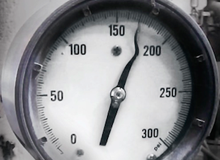
Are your gauges installed properly? WIKA’s industry experts know that all too often this isn’t the case. Improperly installed gauges can lead to premature gauge failure and prevent you from troubleshooting issues with equipment or processes. Don’t let this happen at your plant. Use these six tips for proper gauge installation.
Read More
8 Common Reasons For Pressure Gauge Failure
Submitted by WIKA
Pressure gauge failure can be attributed to one or more of these eight reasons: mechanical vibration, pulsation, extreme temperature, pressure spikes, overpressure, corrosion, clogging, and mishandling/abuse.
Read More
Pt100 and Pt1000 Sensors: Important Facts and Differences
Submitted by WIKA
Many industries use RTDs for measuring temperature, and the sensor in the majority of those devices are either Pt100 or Pt1000. These two temperature sensors have similar characteristics, but their difference in nominal resistance may determine which one you choose for your application.
Read More
Have You Integrated Your Z and Theta Motions Into One Compact Actuator?
Submitted by Valin Corporation
Motion architecture may look fine on paper until the cycle rate increases, the available space shrinks, and the “simple” pick-and-place head becomes far more complicated than expected.
Read More
Using a Differential Pressure Transmitter for Liquid Measurement
Submitted by WIKA
Differential pressure transmitters are designed to measure pressure before and after the fluid encounters an interruption, such as a filter or pump. However, this pressure instrument can also be used to measure liquid levels.
Read More
Introduction to Differential Pressure Measurement
Submitted by WIKA
By measuring differential pressure, users can easily and accurately monitor filter conditions, liquid levels in closed tanks, liquid flow rates inside a pipe, and even the output torque of hydraulic motors.
Read More
Where Should I Install My Thermowell? A Guide for Best Practices
Submitted by WIKA
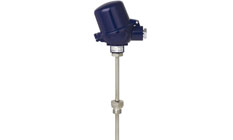
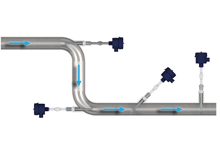
When installing thermowells in a pipeline, a user must first answer several questions regarding their location, quantity, stem length, distance from each another, and effects on the process media.
Read More
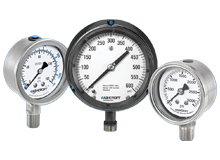
How to Select a Pressure Gauge
Submitted by WIKA
Many factors go into the decision of which industrial pressure gauge to purchase. Asking the “STAMPED” questions regarding Size, Temperature, Application, Media, Pressure, “Ends,” and Delivery time will help buyers determine which gauges are right for their specific situation.
Read More
Integrating Robots into Motion Control Systems
Submitted by Tom Trinh || Valin Corporation
One of the most challenging elements to motion control is the integration of robots. However, the benefits that can be achieved through this type of integration cannot be understated.
Read More
Product Review: 1209 XRA vs T6500 XRA Pressure Gauges for Overpressure Applications
Submitted by Ashcroft
In many industrial processes, sudden pressure spikes—from water hammer, startup surges, pump cycling or valve events—can place measurement instruments under extreme stress. When a gauge cannot withstand these surges, the result is often permanent damage, unexpected downtime and avoidable maintenance costs.
Read More
Ways to Calibrate a Pressure Transducer
Submitted by Ashcroft
Across industries like manufacturing, energy, HVAC, and process control, accurate pressure measurement is critical to maintaining safety, efficiency, and product quality. Over time, even high-quality pressure transducers can experience drift — a gradual deviation between actual and measured pressure caused by vibration, temperature changes, or normal wear.
Read More
How Does Media Temperature Affect Pressure Transducer Performance?
Submitted by Ashcroft
When measuring pressure in challenging environments involving extreme temperatures, your instrument must perform accurately and reliably. Temperature exposure can come from many sources, including the process media and the ambient temperature surrounding the sensor. Each affects the transducer differently, but media temperature has the most direct impact because it acts on the sensing diaphragm and internal components. As media temperature rises or falls, it can distort readings, shorten sensor ...
Read More
How To Properly Store Your Pressure Gauge
Submitted by Ashcroft
Pressure gauges are instruments designed to deliver reliable and accurate readings in demanding applications. Yet, even the most durable gauges can lose accuracy or fail prematurely if they aren’t stored correctly. Many issues that appear as calibration drift or pointer error actually begin long before the gauge is installed—during storage and handling.
Read More
How Do I Select the Right Pressure Gauge Range?
Submitted by Ashcroft
Pressure gauges can be found in virtually every industry. Depending on your application, these instruments play an important role in measuring the air, gas or liquid pressure in your system to keep it running safely and smoothly. However, for optimum efficiency, you will need to make sure the pressure range you choose for your gauge aligns with your application requirements and a few other factors.
Read More
When to Use a Welded Instrument Assembly
Submitted by Ashcroft
No matter what industry you work in, diaphragm seals (also referred to as isolators) and welded assemblies are used to protect your pressure and temperature instrumentation from corrosive process media.
Read More
How to Select the Right Electrical Connection for Pressure Transducers
Submitted by Ashcroft
Selecting the correct electrical connection for a pressure transducer helps ensure your equipment continues to operate effectively, even when affected by vibration, moisture, dust, or temperature extremes that can compromise performance. From off-road equipment to process automation systems, choosing the wrong connector can lead to signal loss, premature failure, or even safety risks.
Read More
When to Use Gas-Actuated Thermometers
Submitted by Ashcroft
In industries where temperature extremes, vibration, or hazardous process environments are part of daily operations, accurate and reliable temperature measurement becomes a serious challenge. In these environments, operators need instruments that deliver accurate readings from a safe distance, reducing the need to approach hazardous areas.
Read More
Choosing Assemblies for Low-Pressure Applications
Submitted by Ashcroft
Monitoring low-pressure processes comes with unique challenges. In industries ranging from food and beverage to wastewater treatment to liquefied natural gas (LNG) transfer, even modest changes in pressure can affect efficiency, product quality, or safety.
Read More
How Accurate Are Your HVAC Pressure Sensors?
Submitted by Ashcroft
Heating, ventilation and air conditioning (HVAC) systems are the backbone of building comfort and safety. Because these systems operate continuously and consume significant energy, even small inefficiencies can drive up operating costs.
Read More
Sizing Coalescers: Best Practices and Common Pitfalls
Submitted by Norm Hall || Valin Corporation
Learn how proper sizing, flow rates, and system parameters impact coalescing performance in three-stage liquid filtration. Improve efficiency and ensure accurate separation.
Read More
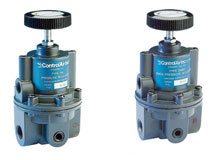
Back Pressure Regulator vs. Pressure Regulator: What’s the Difference and When to Use Each
Submitted by ControlAir
In many industrial and pneumatic systems, pressure control is essential. But not all pressure regulators are created equal. Two of the most commonly used devices—pressure regulators and back pressure regulators—perform very different roles. Choosing the right one depends on where you need to control pressure in your system.
Read More
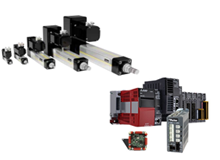
Linear Motor Stage: Precision and Efficiency
Submitted by Valin Corporation
If you've ever found yourself asking "What exactly is a linear servo motor positioner versus a linear servo motor actuator versus a linear servo motor stage?" you're not alone. Let’s break this down clearly and simply.
Read More
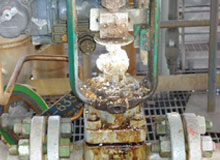
Don't Overlook Stem Seal Leakage in Control Valves
Submitted by Rick Ferdon || Valin Corporation
Discover how rotary valves reduce stem seal leakage compared to globe valves, improving safety and reliability in critical process applications.
Read More
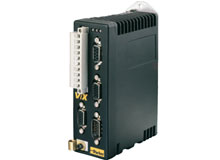
Parker ViX Replacement Options
Submitted by Valin Corporation
For many applications that are currently using Parker’s old ViX drives and controller/drives, AllMotion’s EZ controller/drives may be a great update path. While the ViX had some unique features, most applications didn’t need them, which makes AllMotion’s smaller products probable options.
Read More