Actuator Selection Pitfalls: How Environment Trumps Basic Specs
Submitted by Bruce Ng || Valin Corporation
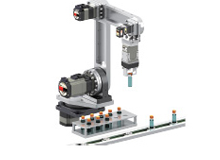
At first glance, selecting the right actuator for your application might seem straightforward. You figure out the load, define the motion, and move forward. For a large portion of applications, that approach works just fine. However, once you step outside that standard 80 percent, things can get complicated quickly.
Read More
Stop Overpaying for Level Measurement - A 3-Factor Selection Guide
Submitted by Steve Molinari
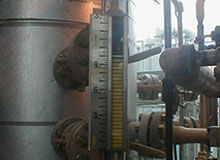
Accurate level measurement is a critical element for many applications in the industrial world; without it, most processes simply cannot function properly. While most plant operators understand this truth, general knowledge often falls short once the conversation shifts to level transmitter selection and the best way to achieve that accuracy.
Read More
What Is a Test Gauge and When Do You Need One?
Submitted by Ashcroft
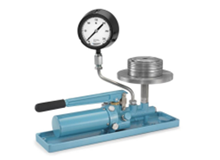
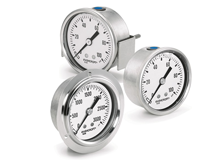
A test gauge is a high-accuracy pressure measurement instrument serving as a reference to verify the performance of other pressure devices, such as working gauges, pressure switches or transmitters. Over time, pressure gauges and sensors in process and industrial systems can drift due to wear, temperature changes, vibration or process conditions. Having a reliable reference helps ensure that your pressure reading can be trusted.
Read More
What Makes OEM Pressure Sensors Accurate and Repeatable?
Submitted by Ashcroft
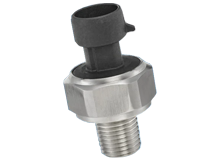
OEM pressure sensors are accurate and repeatable when their sensing technology, materials, calibration and construction work together to deliver consistent pressure measurements over time and under real-world operating conditions.
Read More
How to Unlock Vision-Based Robot Control with the MRC Studio Software
Submitted by Oriental Motor
Building a robot is not easy. Programming a robot can be even more challenging without user-friendly software. In this article, I'll explain a few of the MRC Studio's most useful features and demonstrate how the Robot Vision Calibration function can help reduce costs for your vision-enabled robots.
Read More
Why Use a Saddle Seal in Process Applications?
Submitted by Ashcroft
Have You Ever Wanted to Build Your Own Custom Robot Without Becoming a Full-time Software Developer?
Submitted by Valin Corporation
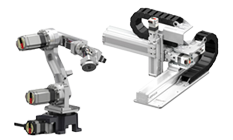
Many OEMs and machine builders have a vision for a specialized robot — a compact SCARA for assembly, a tabletop Cartesian for dispensing, or a small articulated arm for inspection. The mechanical concept is clear. The application is defined.
Read More
Why Material Compatibility Matters When Replacing Pressure Instrumentation
Submitted by Ashcroft
Material compatibility in pressure instrument selection matters because even well intended material upgrades can introduce hidden risks when components interact in real process environments.
Read More
How Does an RTD Work?
Submitted by Ashcroft
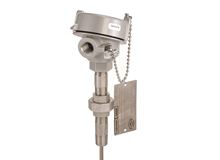
Resistance temperature detectors (RTDs) are passive components whose resistance changes with a change in temperature. This can be measured very accurately, enabling an RTD to translate temperature into a stable electrical signal, even in demanding industrial environments.
Read More
Precision Linear Motion in California for High-Performance Automation
Submitted by Valin Corporation
Explore precision linear motion solutions and high-performance automation expertise in California. From advanced linear actuators to motion control systems, Valin helps engineers and machine builders optimize automation, accuracy, and productivity. Contact our experts to design your next motion solution.
Read More
Six Common Causes for Thermocouple Temperature Measurement Errors
Submitted by WIKA
Thermocouples are among the most popular temperature measurement instruments in industrial applications because of their versatility and ease of use. However, measurement errors can occur. This article discusses the six most common causes of thermocouple errors.
Read More
Pressure Measurement: Understanding PSI, PSIA and PSIG
Submitted by WIKA
Pressure measurement is all about PSI. That’s because pounds per square inch (PSI) is the most common unit for measuring pressure in the U.S. It’s important to understand what PSI means and how it is used, as pressure measurement is an important part of life in the 21st century.
Read More
Integrating Robots into Motion Control Systems
Submitted by Tom Trinh || Valin Corporation
One of the most challenging elements to motion control is the integration of robots. However, the benefits that can be achieved through this type of integration cannot be understated.
Read More
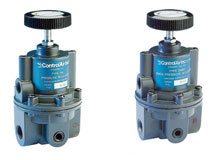
Back Pressure Regulator vs. Pressure Regulator: What’s the Difference and When to Use Each
Submitted by ControlAir
In many industrial and pneumatic systems, pressure control is essential. But not all pressure regulators are created equal. Two of the most commonly used devices—pressure regulators and back pressure regulators—perform very different roles. Choosing the right one depends on where you need to control pressure in your system.
Read More
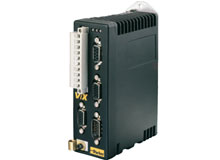
Parker ViX Replacement Options
Submitted by Valin Corporation
For many applications that are currently using Parker’s old ViX drives and controller/drives, AllMotion’s EZ controller/drives may be a great update path. While the ViX had some unique features, most applications didn’t need them, which makes AllMotion’s smaller products probable options.
Read More
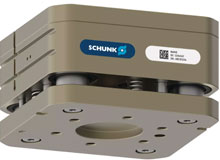
Have you struggled with misaligned parts or costly tolerance errors in robotic material handling?
Submitted by Valin Corporation
Struggling with tolerance errors in robotic processes? Learn how Schunk AGM Compensation Units ensure precise handling and higher productivity.
Read More
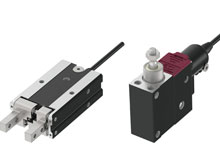
Have You Struggled to Find Small Electric Cylinders to Replace Small Air Cylinders?
Submitted by Valin Corporation
In many industries, small air cylinders have long been the go-to for compact actuation needs. The EC Series Wire Cylinder from IAI delivers a cleaner, simpler, and more precise alternative. By using a wire-driven mechanism powered electrically, the EC Series removes the need for compressed air entirely.
Read More
Have You Outgrown Traditional Screw-Driven Actuators?
Submitted by Valin Corporation
If you're building instruments that demand high-resolution positioning—think semiconductor inspection, digital pathology, or precision metrology—then you already know that not all linear stages are created equal.
Read More
Have You Ever Faced Downtime Due to an Unexpected Equipment Failure?
Submitted by Valin Corporation
Unplanned downtime can bring production to a grinding halt—often due to preventable equipment failures.
Read More
Have you ever struggled with achieving precision and speed in the same motion application?
Submitted by Valin Corporation
When every micron matters and every millisecond counts, conventional linear motion systems often fall short. If you are chasing peak throughput, ultra-smooth motion, and zero mechanical backlash, it's time to look beyond belts and screws. That’s where the Parker XLM Series Linear Motor Stages come in.
Read More
Implementing IIoT and Managing Expectation
Submitted by Valin Corporation
There is still a sizeable gap between expectations from the end user perspective and the reality of what is possible tapping into the Industrial Internet of Things (IIoT). Implementing the tools necessary is more than just flipping a switch. There are specific challenges associated with this implementation; however, strategies have been developed to help bridge that gap.
Read More
EC ELECYLINDER® 3-Position Mode Specification from IAI
Submitted by Valin Corporation
Thanks to the EC ELECYLINDER® 3-position mode specification option, stops are possible not only at the forward and backward ends but also at intermediate positions. The cycle time can be shortened by stopping at intermediate positions.
Read More
Have You Considered These Factors for Belt Drive Applications?
Submitted by Dan Dal Colletto || Valin Corporation
When applying a belt drive, especially in vertical applications that involve significant loads, understanding the design considerations and potential failure points is crucial. Here, we explore the dynamics, considerations, and best practices for deploying belt drives in such demanding situations.
Read More
Have You Simplified Your Safety Management Across Complex Industrial Systems?
Submitted by James Gaitan || Valin Corporation
Safety is a paramount concern in the complex world of industrial automation. The Mosaic Safety Integrated Controller from ReeR Safety is designed to streamline safety management across various applications.
Read More