Is Your Plant Air System Working Against You?
Submitted by Kari Kohonen || Valin Corporation
Improve industrial compressed air system efficiency, reduce energy waste, and protect equipment with practical insights on air quality, filtration, and maintenance from Valin.
Read More
Fast-Shipping Watlow Products with 5–15 Day Lead Times
Get select Watlow heaters and process heating products with 5–15 day lead times. Shop Watlow immersion, screw plug, flanged and circulation heaters from Valin.
Read More
5 Benefits of Switching from Pneumatic Cylinders to IAI ELECYLINDER
Discover 5 benefits of replacing pneumatic cylinders with IAI ELECYLINDER, including predictive maintenance, reduced downtime, lower maintenance costs, and smoother motion.
Read More
Choosing the Right Encoder
Learn how to choose the right encoder for your motion control application. Compare incremental, analog, and absolute encoders for speed, resolution, feedback, and compatibility.
Read More
Getting Commutation Right When Mixing Motors and Drives
Submitted by Bruce Ng || Valin Corporation
Even experienced engineers and operators can encounter trouble when integrating different brands of drives and motors into a cohesive system. One critical factor that makes or breaks the integration’s success is motor commutation, or the process of switching between motor phases to ensure smooth, continuous operation.
Read More
Electrical Noise Recognition and Prevention
Learn how electrical noise impacts industrial automation systems. Discover common EMI symptoms, EMC installation practices, grounding techniques, shielding methods, and troubleshooting strategies to improve machine reliability.
Read More
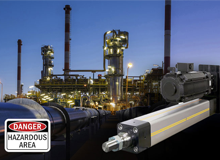
Actuator Selection Pitfalls: How Environment Trumps Basic Specs
Submitted by Bruce Ng || Valin Corporation
At first glance, selecting the right actuator for your application might seem straightforward. You figure out the load, define the motion, and move forward. For a large portion of applications, that approach works just fine. However, once you step outside that standard 80 percent, things can get complicated quickly.
Read More
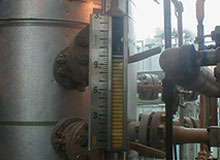
Stop Overpaying for Level Measurement - A 3-Factor Selection Guide
Submitted by Steve Molinari
Accurate level measurement is a critical element for many applications in the industrial world; without it, most processes simply cannot function properly. While most plant operators understand this truth, general knowledge often falls short once the conversation shifts to level transmitter selection and the best way to achieve that accuracy.
Read More
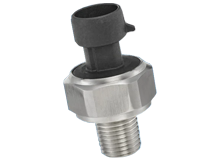
What Makes OEM Pressure Sensors Accurate and Repeatable?
Submitted by Ashcroft
OEM pressure sensors are accurate and repeatable when their sensing technology, materials, calibration and construction work together to deliver consistent pressure measurements over time and under real-world operating conditions.
Read More
How to Unlock Vision-Based Robot Control with the MRC Studio Software
Submitted by Oriental Motor
Building a robot is not easy. Programming a robot can be even more challenging without user-friendly software. In this article, I'll explain a few of the MRC Studio's most useful features and demonstrate how the Robot Vision Calibration function can help reduce costs for your vision-enabled robots.
Read More
How Do I Safely Select Diaphragm Seals for High Temperature Applications?
Submitted by Ashcroft
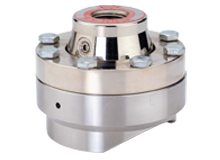
If you work in an industry that involves high-heat processes, such as oil and gas and petrochemical applications, you know the challenge of keeping your pressure and temperature measurement instruments working effectively. These instruments are put to the test daily with exposure to extreme temperatures, abrasive chemicals and other elements that may not be compatible with the wetted components (parts that are in contact with the process).
Read More
Why Use a Saddle Seal in Process Applications?
Submitted by Ashcroft
Why Use a Differential Pressure Gauge to Measure Flow?
Submitted by Ashcroft
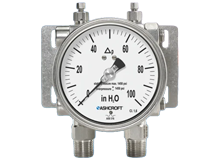
A differential pressure (DP) gauge is used to measure flow by converting the pressure drop created by a flow restriction into a readable flow rate based on established fluid dynamics principles. In many industrial applications, engineers need a reliable way to monitor liquid or gas flow but may not require the complexity or cost of an electronic flow meter. In these cases, a DP gauge provides a simple, mechanical solution for flow indication.
Read More
Why Material Compatibility Matters When Replacing Pressure Instrumentation
Submitted by Ashcroft
Material compatibility in pressure instrument selection matters because even well intended material upgrades can introduce hidden risks when components interact in real process environments.
Read More
How Does an RTD Work?
Submitted by Ashcroft
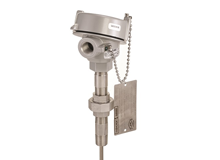
Resistance temperature detectors (RTDs) are passive components whose resistance changes with a change in temperature. This can be measured very accurately, enabling an RTD to translate temperature into a stable electrical signal, even in demanding industrial environments.
Read More
What's the Difference Between NIST and ISO/IEC 17025 Calibration?
Submitted by Ashcroft
The National Institute of Standards and Technology (NIST) is the U.S. National Metrology Institute responsible for maintaining primary measurement standards. ISO/IEC 17025 is the internationally recognized standard for testing and calibration laboratories. Both organizations provide widely recognized calibration frameworks used to ensure accurate, reliable measurement results across many industries.
Read More
OEM High-Pressure Transducers: A Comparative Review
Submitted by Ashcroft
High-pressure OEM systems depend on reliable, repeatable pressure measurement to maintain performance, protect equipment, and ensure operator safety. Whether used in mobile hydraulics, pump monitoring, transportation systems, or demanding industrial automation, an inaccurate or unstable pressure signal can lead to equipment damage, premature component failure, or inconsistent system behavior.
Read More
Why Should My Pressure Gauge Pointer be in the Center of the Scale?
Submitted by Ashcroft
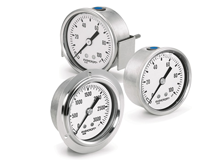
As a leader in pressure and temperature instrumentation, Ashcroft recommends customers apply ASME B40.100 guidance, which suggests choosing a gauge range that keeps normal operating pressure near the middle of the scale. This simple best practice supports accuracy, reliability and overall performance.
Read More
Precision Linear Motion in California for High-Performance Automation
Submitted by Valin Corporation
Explore precision linear motion solutions and high-performance automation expertise in California. From advanced linear actuators to motion control systems, Valin helps engineers and machine builders optimize automation, accuracy, and productivity. Contact our experts to design your next motion solution.
Read More
Pressure Gauge Know-How: Difference Between NPT and G Connections
Submitted by WIKA
Most pressure gauges around the world have either an NPT or G (metric) connection for insertion into processes. It is useful to know their differences – and also how to recognize which type is in use – without having to remove the entire assembly.
Read More
Pressure Sensors, Pressure Transducers, and Pressure Transmitters: What’s the Difference?
Submitted by WIKA
Almost everyone uses the terms pressure sensor, pressure transducer, and pressure transmitter interchangeably, and that’s okay!
Read More
The Magnetic Level Indicator Working Principle: Simple and Effective
Submitted by WIKA
The magnetic level indicator working principle is used in level instrumentation. The interaction between the float magnets inside the chamber and magnetic flags outside the chamber provides continuous level information. This type of level indicator doesn’t require power, making it ideal for a variety of applications across industries.
Read More
Using a Differential Pressure Transmitter for Liquid Measurement
Submitted by WIKA
Differential pressure transmitters are designed to measure pressure before and after the fluid encounters an interruption, such as a filter or pump. However, this pressure instrument can also be used to measure liquid levels.
Read More
Introduction to Differential Pressure Measurement
Submitted by WIKA
By measuring differential pressure, users can easily and accurately monitor filter conditions, liquid levels in closed tanks, liquid flow rates inside a pipe, and even the output torque of hydraulic motors.
Read More