Stop Overpaying for Level Measurement - A 3-Factor Selection Guide
Submitted by Steve Molinari
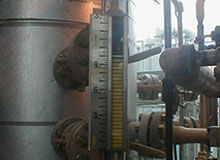
Accurate level measurement is a critical element for many applications in the industrial world; without it, most processes simply cannot function properly. While most plant operators understand this truth, general knowledge often falls short once the conversation shifts to level transmitter selection and the best way to achieve that accuracy.
Read More
Ethanol Leak Detection for Environmental Protection in Oil and Gas
Submitted by Naftosense
The Naftosense ethanol leak detection system is designed specifically for alcohol-based products. It’s immune to water and can detect ethanol and other alcohols at concentrations as low as 20 percent, even when dissolved in groundwater.
Read More
Why Material Compatibility Matters When Replacing Pressure Instrumentation
Submitted by Ashcroft
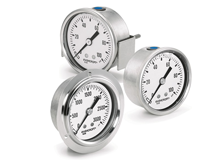
Material compatibility in pressure instrument selection matters because even well intended material upgrades can introduce hidden risks when components interact in real process environments.
Read More
OEM High-Pressure Transducers: A Comparative Review
Submitted by Ashcroft
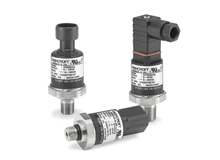
High-pressure OEM systems depend on reliable, repeatable pressure measurement to maintain performance, protect equipment, and ensure operator safety. Whether used in mobile hydraulics, pump monitoring, transportation systems, or demanding industrial automation, an inaccurate or unstable pressure signal can lead to equipment damage, premature component failure, or inconsistent system behavior.
Read More
Pressure Gauge Know-How: Difference Between NPT and G Connections
Submitted by WIKA
Most pressure gauges around the world have either an NPT or G (metric) connection for insertion into processes. It is useful to know their differences – and also how to recognize which type is in use – without having to remove the entire assembly.
Read More
Six Common Causes for Thermocouple Temperature Measurement Errors
Submitted by WIKA
Thermocouples are among the most popular temperature measurement instruments in industrial applications because of their versatility and ease of use. However, measurement errors can occur. This article discusses the six most common causes of thermocouple errors.
Read More
Pressure Measurement: Understanding PSI, PSIA and PSIG
Submitted by WIKA
Pressure measurement is all about PSI. That’s because pounds per square inch (PSI) is the most common unit for measuring pressure in the U.S. It’s important to understand what PSI means and how it is used, as pressure measurement is an important part of life in the 21st century.
Read More
Pressure Sensors, Pressure Transducers, and Pressure Transmitters: What’s the Difference?
Submitted by WIKA
Almost everyone uses the terms pressure sensor, pressure transducer, and pressure transmitter interchangeably, and that’s okay!
Read More
The Magnetic Level Indicator Working Principle: Simple and Effective
Submitted by WIKA
The magnetic level indicator working principle is used in level instrumentation. The interaction between the float magnets inside the chamber and magnetic flags outside the chamber provides continuous level information. This type of level indicator doesn’t require power, making it ideal for a variety of applications across industries.
Read More
Tips for Correctly Installing Pressure Gauges
Submitted by WIKA
Are your gauges installed properly? WIKA’s industry experts know that all too often this isn’t the case. Improperly installed gauges can lead to premature gauge failure and prevent you from troubleshooting issues with equipment or processes. Don’t let this happen at your plant. Use these six tips for proper gauge installation.
Read More
8 Common Reasons For Pressure Gauge Failure
Submitted by WIKA
Pressure gauge failure can be attributed to one or more of these eight reasons: mechanical vibration, pulsation, extreme temperature, pressure spikes, overpressure, corrosion, clogging, and mishandling/abuse.
Read More
Pt100 and Pt1000 Sensors: Important Facts and Differences
Submitted by WIKA
Many industries use RTDs for measuring temperature, and the sensor in the majority of those devices are either Pt100 or Pt1000. These two temperature sensors have similar characteristics, but their difference in nominal resistance may determine which one you choose for your application.
Read More
Using a Differential Pressure Transmitter for Liquid Measurement
Submitted by WIKA
Differential pressure transmitters are designed to measure pressure before and after the fluid encounters an interruption, such as a filter or pump. However, this pressure instrument can also be used to measure liquid levels.
Read More
Introduction to Differential Pressure Measurement
Submitted by WIKA
By measuring differential pressure, users can easily and accurately monitor filter conditions, liquid levels in closed tanks, liquid flow rates inside a pipe, and even the output torque of hydraulic motors.
Read More
Where Should I Install My Thermowell? A Guide for Best Practices
Submitted by WIKA
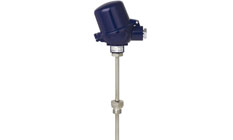
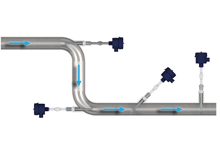
When installing thermowells in a pipeline, a user must first answer several questions regarding their location, quantity, stem length, distance from each another, and effects on the process media.
Read More
How to Select a Pressure Gauge
Submitted by WIKA
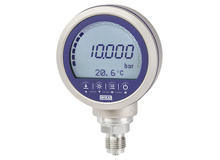
Many factors go into the decision of which industrial pressure gauge to purchase. Asking the “STAMPED” questions regarding Size, Temperature, Application, Media, Pressure, “Ends,” and Delivery time will help buyers determine which gauges are right for their specific situation.
Read More
Integrating Robots into Motion Control Systems
Submitted by Tom Trinh || Valin Corporation
One of the most challenging elements to motion control is the integration of robots. However, the benefits that can be achieved through this type of integration cannot be understated.
Read More
Sizing Coalescers: Best Practices and Common Pitfalls
Submitted by Norm Hall || Valin Corporation
Learn how proper sizing, flow rates, and system parameters impact coalescing performance in three-stage liquid filtration. Improve efficiency and ensure accurate separation.
Read More
Back Pressure Regulator vs. Pressure Regulator: What’s the Difference and When to Use Each
Submitted by ControlAir
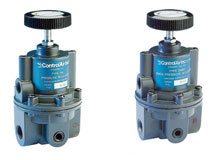
In many industrial and pneumatic systems, pressure control is essential. But not all pressure regulators are created equal. Two of the most commonly used devices—pressure regulators and back pressure regulators—perform very different roles. Choosing the right one depends on where you need to control pressure in your system.
Read More
Don't Overlook Stem Seal Leakage in Control Valves
Submitted by Rick Ferdon || Valin Corporation
Discover how rotary valves reduce stem seal leakage compared to globe valves, improving safety and reliability in critical process applications.
Read More
Turnarounds: Keeping Inventory Under Control
Submitted by Kari Kohonen || Valin Corporation
Learn how proactive inventory management, vendor support, and careful valve planning ensure a successful refinery shutdown and turnaround.
Read More
Hazard Area Flow Meter Measurement Solutions
Macnaught hazard rated flow meter products offer global approval ratings, high accuracy and repeatability with no flow conditioning required. Designed for clean process fluids that require Explosion Proof, Intrinsically Safe or Simple Safe measurement needs.
Read More
Acromag’s Ethernet Remote I/O Modules Add Profinet Communication
Submitted by Acromag
Expandable Ethernet I/O modules now support three field-selectable protocols for networks using Profinet, EtherNet/IP, and Modbus TCP/IP.
Read More
Parker Control Tech Tour is Hitting the Road
Valin and Parker are teaming up to host an exclusive event, showcasing process control products. Explore Parker's state-of-the art 68’ expandable tractor-trailer with a customized display room featuring flow, control, pressure and corrosion control products and solutions.
Read More