Ethanol Leak Detection for Environmental Protection in Oil and Gas
Submitted by Naftosense
The Naftosense ethanol leak detection system is designed specifically for alcohol-based products. It’s immune to water and can detect ethanol and other alcohols at concentrations as low as 20 percent, even when dissolved in groundwater.
Read More
Pressure Gauge Know-How: Difference Between NPT and G Connections
Submitted by WIKA
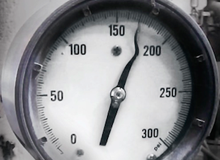
Most pressure gauges around the world have either an NPT or G (metric) connection for insertion into processes. It is useful to know their differences – and also how to recognize which type is in use – without having to remove the entire assembly.
Read More
Six Common Causes for Thermocouple Temperature Measurement Errors
Submitted by WIKA
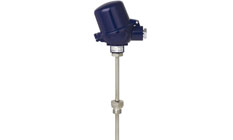
Thermocouples are among the most popular temperature measurement instruments in industrial applications because of their versatility and ease of use. However, measurement errors can occur. This article discusses the six most common causes of thermocouple errors.
Read More
Pressure Measurement: Understanding PSI, PSIA and PSIG
Submitted by WIKA
Pressure measurement is all about PSI. That’s because pounds per square inch (PSI) is the most common unit for measuring pressure in the U.S. It’s important to understand what PSI means and how it is used, as pressure measurement is an important part of life in the 21st century.
Read More
Pressure Sensors, Pressure Transducers, and Pressure Transmitters: What’s the Difference?
Submitted by WIKA
Almost everyone uses the terms pressure sensor, pressure transducer, and pressure transmitter interchangeably, and that’s okay!
Read More
The Magnetic Level Indicator Working Principle: Simple and Effective
Submitted by WIKA
The magnetic level indicator working principle is used in level instrumentation. The interaction between the float magnets inside the chamber and magnetic flags outside the chamber provides continuous level information. This type of level indicator doesn’t require power, making it ideal for a variety of applications across industries.
Read More
Tips for Correctly Installing Pressure Gauges
Submitted by WIKA
Are your gauges installed properly? WIKA’s industry experts know that all too often this isn’t the case. Improperly installed gauges can lead to premature gauge failure and prevent you from troubleshooting issues with equipment or processes. Don’t let this happen at your plant. Use these six tips for proper gauge installation.
Read More
8 Common Reasons For Pressure Gauge Failure
Submitted by WIKA
Pressure gauge failure can be attributed to one or more of these eight reasons: mechanical vibration, pulsation, extreme temperature, pressure spikes, overpressure, corrosion, clogging, and mishandling/abuse.
Read More
Pt100 and Pt1000 Sensors: Important Facts and Differences
Submitted by WIKA
Many industries use RTDs for measuring temperature, and the sensor in the majority of those devices are either Pt100 or Pt1000. These two temperature sensors have similar characteristics, but their difference in nominal resistance may determine which one you choose for your application.
Read More
Using a Differential Pressure Transmitter for Liquid Measurement
Submitted by WIKA
Differential pressure transmitters are designed to measure pressure before and after the fluid encounters an interruption, such as a filter or pump. However, this pressure instrument can also be used to measure liquid levels.
Read More
Back Pressure Regulator vs. Pressure Regulator: What’s the Difference and When to Use Each
Submitted by ControlAir
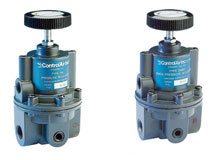
In many industrial and pneumatic systems, pressure control is essential. But not all pressure regulators are created equal. Two of the most commonly used devices—pressure regulators and back pressure regulators—perform very different roles. Choosing the right one depends on where you need to control pressure in your system.
Read More
Hazard Area Flow Meter Measurement Solutions
Macnaught hazard rated flow meter products offer global approval ratings, high accuracy and repeatability with no flow conditioning required. Designed for clean process fluids that require Explosion Proof, Intrinsically Safe or Simple Safe measurement needs.
Read More
Acromag’s Ethernet Remote I/O Modules Add Profinet Communication
Submitted by Acromag
Expandable Ethernet I/O modules now support three field-selectable protocols for networks using Profinet, EtherNet/IP, and Modbus TCP/IP.
Read More
Authorized Parker Distributor
Valin is proud to be an authorized distributor of Parker Hannifin Aerospace, Engineered Materials, Filtration, Fluid Connectors and Motion Systems. Click below to learn more.
Read More
If it Flows Through a Pipe Valin Can Help
If it flows through a pipe Valin can heat it, filter it, control it, measure it, automate it and network it. Contact us today to learn more.
Read More
Focused Monitoring: A Strategic Approach to Preventative Maintenance and Condition Monitoring
Submitted by Valin Corporation
Preventative maintenance and condition monitoring are not only independent concepts, but they are also ones that should not be treated with a one-size-fits-all approach. Learn more in the blog below.
Read More
Eliminate Pneumatic Valve Emissions in Your Upstream Oil and Gas Applications
Emerson has developed a groundbreaking solution for addressing challenges in upstream oil and gas applications related to pneumatic valve emissions.
Read More
Decrease Process Time, Improve Outcomes with Advanced Vibration Suppression
Submitted by Mitsubishi Electric
Is unchecked vibration affecting your bottom line? Vibration can bring any high-speed, high-precision process to an unexpected and costly standstill.
Read More
Rotork High Pressure Regulator (HPH)
Rotork Fairchild's High Pressure - Pressure Reducing Regulator is suitable for 690 bar (10000 psig) inlet and outlet hydraulic and pneumatic applications.
Read More
Fluid Power - Introduction to Pressure: The Basics
Submitted by Russ Rochambeau, Engineering Manager, IFPS Hydraulic Specialist, Valin Corporation
When discussing fluid power, pressure is the basis for producing any kind of work. Work cannot be achieved without pressure. To understand the finer points of fluid power, one must first understand the concept of pressure
Read More
OSHA's Standard Interpretation Letters
Submitted by Automation Engineering Staff
One resource that you may have overlooked is OSHA's collection of standard interpretation letters, which are OSHA's official responses to written questions about compliance with the agency's requirements.
Read More