Actuator Selection Pitfalls: How Environment Trumps Basic Specs
Submitted by Bruce Ng || Valin Corporation
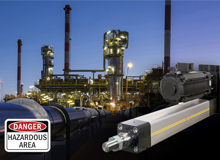
At first glance, selecting the right actuator for your application might seem straightforward. You figure out the load, define the motion, and move forward. For a large portion of applications, that approach works just fine. However, once you step outside that standard 80 percent, things can get complicated quickly.
Read More
Stop Overpaying for Level Measurement - A 3-Factor Selection Guide
Submitted by Steve Molinari
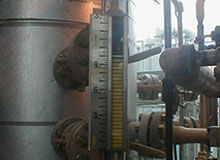
Accurate level measurement is a critical element for many applications in the industrial world; without it, most processes simply cannot function properly. While most plant operators understand this truth, general knowledge often falls short once the conversation shifts to level transmitter selection and the best way to achieve that accuracy.
Read More
What Is a Test Gauge and When Do You Need One?
Submitted by Ashcroft
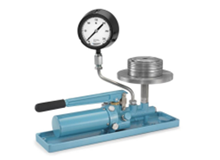
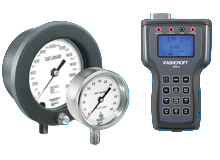
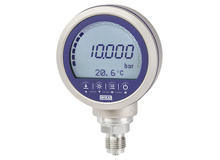
A test gauge is a high-accuracy pressure measurement instrument serving as a reference to verify the performance of other pressure devices, such as working gauges, pressure switches or transmitters. Over time, pressure gauges and sensors in process and industrial systems can drift due to wear, temperature changes, vibration or process conditions. Having a reliable reference helps ensure that your pressure reading can be trusted.
Read More
What Makes OEM Pressure Sensors Accurate and Repeatable?
Submitted by Ashcroft
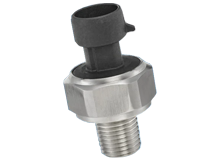
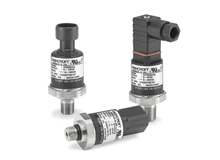
OEM pressure sensors are accurate and repeatable when their sensing technology, materials, calibration and construction work together to deliver consistent pressure measurements over time and under real-world operating conditions.
Read More
How to Unlock Vision-Based Robot Control with the MRC Studio Software
Submitted by Oriental Motor
Building a robot is not easy. Programming a robot can be even more challenging without user-friendly software. In this article, I'll explain a few of the MRC Studio's most useful features and demonstrate how the Robot Vision Calibration function can help reduce costs for your vision-enabled robots.
Read More
How Do I Safely Select Diaphragm Seals for High Temperature Applications?
Submitted by Ashcroft
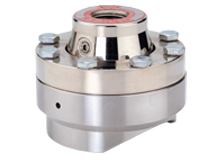
If you work in an industry that involves high-heat processes, such as oil and gas and petrochemical applications, you know the challenge of keeping your pressure and temperature measurement instruments working effectively. These instruments are put to the test daily with exposure to extreme temperatures, abrasive chemicals and other elements that may not be compatible with the wetted components (parts that are in contact with the process).
Read More
Why Use a Saddle Seal in Process Applications?
Submitted by Ashcroft
Have You Ever Wanted to Build Your Own Custom Robot Without Becoming a Full-time Software Developer?
Submitted by Valin Corporation
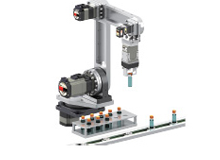
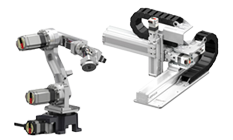
Many OEMs and machine builders have a vision for a specialized robot — a compact SCARA for assembly, a tabletop Cartesian for dispensing, or a small articulated arm for inspection. The mechanical concept is clear. The application is defined.
Read More
Why Use a Differential Pressure Gauge to Measure Flow?
Submitted by Ashcroft
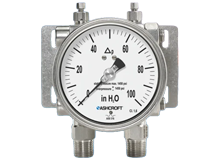
A differential pressure (DP) gauge is used to measure flow by converting the pressure drop created by a flow restriction into a readable flow rate based on established fluid dynamics principles. In many industrial applications, engineers need a reliable way to monitor liquid or gas flow but may not require the complexity or cost of an electronic flow meter. In these cases, a DP gauge provides a simple, mechanical solution for flow indication.
Read More
Why Material Compatibility Matters When Replacing Pressure Instrumentation
Submitted by Ashcroft
Material compatibility in pressure instrument selection matters because even well intended material upgrades can introduce hidden risks when components interact in real process environments.
Read More
How Does an RTD Work?
Submitted by Ashcroft
Resistance temperature detectors (RTDs) are passive components whose resistance changes with a change in temperature. This can be measured very accurately, enabling an RTD to translate temperature into a stable electrical signal, even in demanding industrial environments.
Read More
What's the Difference Between NIST and ISO/IEC 17025 Calibration?
Submitted by Ashcroft
The National Institute of Standards and Technology (NIST) is the U.S. National Metrology Institute responsible for maintaining primary measurement standards. ISO/IEC 17025 is the internationally recognized standard for testing and calibration laboratories. Both organizations provide widely recognized calibration frameworks used to ensure accurate, reliable measurement results across many industries.
Read More
OEM High-Pressure Transducers: A Comparative Review
Submitted by Ashcroft
High-pressure OEM systems depend on reliable, repeatable pressure measurement to maintain performance, protect equipment, and ensure operator safety. Whether used in mobile hydraulics, pump monitoring, transportation systems, or demanding industrial automation, an inaccurate or unstable pressure signal can lead to equipment damage, premature component failure, or inconsistent system behavior.
Read More
Why Should My Pressure Gauge Pointer be in the Center of the Scale?
Submitted by Ashcroft
As a leader in pressure and temperature instrumentation, Ashcroft recommends customers apply ASME B40.100 guidance, which suggests choosing a gauge range that keeps normal operating pressure near the middle of the scale. This simple best practice supports accuracy, reliability and overall performance.
Read More
Pressure Gauge Know-How: Difference Between NPT and G Connections
Submitted by WIKA
Most pressure gauges around the world have either an NPT or G (metric) connection for insertion into processes. It is useful to know their differences – and also how to recognize which type is in use – without having to remove the entire assembly.
Read More
Pressure Measurement: Understanding PSI, PSIA and PSIG
Submitted by WIKA
Pressure measurement is all about PSI. That’s because pounds per square inch (PSI) is the most common unit for measuring pressure in the U.S. It’s important to understand what PSI means and how it is used, as pressure measurement is an important part of life in the 21st century.
Read More
Pressure Sensors, Pressure Transducers, and Pressure Transmitters: What’s the Difference?
Submitted by WIKA
Almost everyone uses the terms pressure sensor, pressure transducer, and pressure transmitter interchangeably, and that’s okay!
Read More
The Magnetic Level Indicator Working Principle: Simple and Effective
Submitted by WIKA
The magnetic level indicator working principle is used in level instrumentation. The interaction between the float magnets inside the chamber and magnetic flags outside the chamber provides continuous level information. This type of level indicator doesn’t require power, making it ideal for a variety of applications across industries.
Read More
Have You Integrated Your Z and Theta Motions Into One Compact Actuator?
Submitted by Valin Corporation
Motion architecture may look fine on paper until the cycle rate increases, the available space shrinks, and the “simple” pick-and-place head becomes far more complicated than expected.
Read More
Using a Differential Pressure Transmitter for Liquid Measurement
Submitted by WIKA
Differential pressure transmitters are designed to measure pressure before and after the fluid encounters an interruption, such as a filter or pump. However, this pressure instrument can also be used to measure liquid levels.
Read More
Introduction to Differential Pressure Measurement
Submitted by WIKA
By measuring differential pressure, users can easily and accurately monitor filter conditions, liquid levels in closed tanks, liquid flow rates inside a pipe, and even the output torque of hydraulic motors.
Read More
Where Should I Install My Thermowell? A Guide for Best Practices
Submitted by WIKA
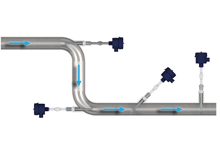
When installing thermowells in a pipeline, a user must first answer several questions regarding their location, quantity, stem length, distance from each another, and effects on the process media.
Read More
How to Select a Pressure Gauge
Submitted by WIKA
Many factors go into the decision of which industrial pressure gauge to purchase. Asking the “STAMPED” questions regarding Size, Temperature, Application, Media, Pressure, “Ends,” and Delivery time will help buyers determine which gauges are right for their specific situation.
Read More
Integrating Robots into Motion Control Systems
Submitted by Tom Trinh || Valin Corporation
One of the most challenging elements to motion control is the integration of robots. However, the benefits that can be achieved through this type of integration cannot be understated.
Read More