Introducing Zwick's TRI-SHARK High-Performance Control Valves
Submitted by ZWICK
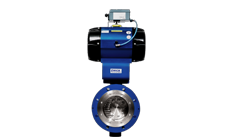
TRI-SHARK control valves are able to achieve a equal percentage inherent characteristic which greatly extends the control rangeability.
Watch VideoSubmitted by ZWICK
TRI-SHARK control valves are able to achieve a equal percentage inherent characteristic which greatly extends the control rangeability.
Watch VideoSubmitted by ZWICK

The TRI-BLOCK series enables redundant shut-off in a valve housing. Two butterfly valves of the TRI-CON series, with the proven 3-fold eccentric, metal-sealing principle and an integrated bleed port, make it possible to implement them in one valve.
Watch VideoSubmitted by ZWICK
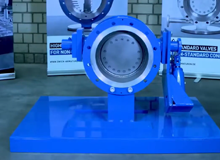
The check valves of the TRI-CHECK series are based on the same 3-fold eccentric geometry as the butterfly valves of the TRI-CON series. Friction-free opening and closing of the flap minimizes natural wear.
Watch VideoSubmitted by WIKA

Choosing the right industrial pressure gauge doesn’t have to be complicated. In this video, we walk you through a simple and proven framework called STAMPED to help you select the best pressure gauge for your application—every time.
Watch VideoSubmitted by WIKA

High-performance thermocouples are the workhorses of industrial temperature measurement — especially in extreme environments. In this video, we explain how thermocouples work, why they’re ideal for high-temperature, high-pressure, and high-vibration applications, and how to avoid common measurement errors.
Watch VideoSubmitted by WIKA

Discover the differences between pressure transducers and pressure transmitters in this informative video. Learn how each device functions and their specific applications. Get insights into selecting the right tool for your pressure measurement needs.
Watch VideoSubmitted by WIKA

In this video, we dive into the fundamentals and advanced concepts of differential pressure measurement using WIKA's cutting-edge instruments. Whether you're an industry professional or a student looking to expand your knowledge, this video covers everything you need to know about differential pressure sensors and their applications.
Watch Video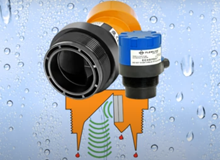
Where should you install my ultrasonic or radar liquid level sensor on your tank? Since tanks vary from simple to complex, the short answer is: mount the sensor on a flat, perpendicular surface with clear, unobstructed measurement space down to the tank bottom.
Watch Video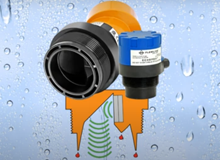
A standpipe is a simple barrier that isolates the sensor’s acoustic or RF signal from the rest of the tank. This improves performance in three cases. First, extreme agitation can scatter the signal and cause erratic readings; a standpipe dampens the turbulence at the measurement point.
Watch Video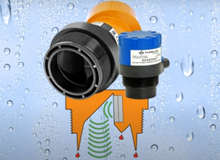
Condensation is the most common variable in liquid level applications, and it degrades the measurement reliability of typical ultrasonic sensors. For this reason, users often pay more for radar sensors to address condensation. Until now.
Watch Video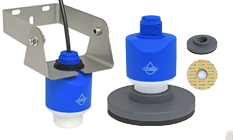
This video introduces EchoBeam, a new 80 GHz radar level sensor from Flowline. The sensor offers reliable level measurement for liquids and solids, with features like high accuracy, narrow beam, zero deadband, and maintenance-free operation.
Watch VideoSubmitted by Flowline
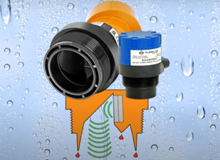
When installing an ultrasonic or radar level sensor, the approach depends on your tank type, material, and sensing technology.
Watch VideoSubmitted by Levi Transtrum || Valin Corporation

In this video, Levi demos the Yokogawa e-RT3 PLC.
Watch Video
Join Dave Dlugos, Product Marketing Leader at Ashcroft, as he breaks down the fundamentals of RTDs (Resistance Temperature Detectors) and thermocouples. With 40 years of experience in temperature and pressure measurement.
Watch Video
Have you considered monitoring RTD or resistance sensor types to improve your process control and operational efficiency? In industrial applications, precise monitoring and efficient communication are key to ensuring smooth operations and optimal performance.
Watch Video
Welcome to another Product Highlight from Parker Instrumentation Products Division. The B Series Ball Valves Parker's two-way and three-way ball valves are available in 316 stainless steel brass Hastelloy six Molly Manel and titanium.
Watch Video
Parker Instrumentation Products is a division of Parker Hannifin Corporation, a fortune 250 company that specializes in motion and control technologies. The instrumentation products division focuses on manufacturing and selling high quality pressure and temperature process control instruments.
Watch Video
This video is about Parker Autoclave's high-pressure cone and threaded fittings and tubing. Parker Autoclave high-pressure connection with a pressure rating of up to 60,000 PSI is a development of the original cone and threaded connection which has been the standard in high-pressure technology since its discovery by the US government in the 1930's.
Watch Video
Parker Autoclave Engineers, a part of the instrumentation products division of Parker Hannifin, combines high-pressure industry knowledge, manufacturing expertise, and technological innovation to offer a broad range of products and services to customers across a wide range of industries.
Watch Video
Experience the pinnacle of fuel leak detection with Naftosense FM-7745 Approved Products, certified to deliver unmatched safety and efficiency.
Watch Video
Heat tape? Heat cable? Heat trace? What’s the difference?

https://youtu.be/eWxs_tiiBcshttps://youtu.be/gz_mpIcFP9YThere are two main applications when it comes to tank heating- maintaining temperature or increasing temperature. Temperature maintenance, is typically accomplished via external means like heat trace or with insulating blankets wrapped around the tank.
Watch Video
In this video, Nathan will be focusing on how to increase productivity, which is a key initiative for any company wanting to increase market share in today’s challenging economy. He will be focusing on the Watlow Aspyre power controller and its role in helping increase productivity.
Watch Video
There are 10 major types of compressed air contaminants. This video will look at these contaminants in detail to understand the problems they can cause within a compressed air system.
Watch Video