Modern Tools for Sizing Control Valves and Actuators
Submitted by Jon Monsen || Valin Corporation
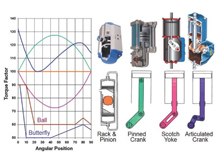
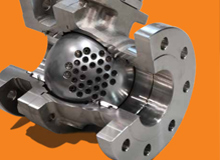
Valve sizing and proper application of control valves have always gone hand-in-hand. However, the tools available to valve users have changed and improved significantly over time.
Read More
The Future of Servo Technology in Harsh Environments
Submitted by Dan Colletto || Valin Corporation
The latest developments in servo technology allow for the benefits of high-performance motion control to be used in harsh environments.
Read More
Process Control Building Blocks and Standards
Submitted by Chris Sullivan || Valin Corporation
Despite the demand for standardized communication protocols among manufacturers, both the manufacturers and end users face challenges when it comes to agreeing on a path.
Read More
Optimization: Filtration for Processes Inside Refineries
Submitted by Chris Sullivan || Valin Corporation
Proper filtration is one of the most important functions performed inside refineries. Filtration is the removal of contaminants through some type of synthetic, paper, pleated, or wound media. The goal of this process is to achieve a specific level of cleanliness.
Read More
Retrofitting Customized Valves for Pipeline Monitoring
Submitted by Ray Herrera || Valin Corporation
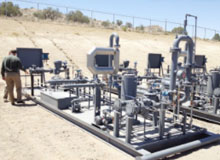
Oil and gas engineers face a problem in accurately and reliably measuring and monitoring the various fluids that are introduced into oil pipelines from well-site pumping stations. A thorough understanding of both the oil separation process and the properties of valves and actuators is required.
Read More
Best Practices: Pipe and Valve Selection for a Cooling System
Submitted by Ray Herrera || Valin Corporation
When selecting the pipes and valves for a cooling system, it is important to understand the options available—and the possible outcomes associated with each selection. Many factors can impact the effectiveness, longevity, and quality of the overall cooling system. Learn more.
Read More
Ensuring IIoT Connectivity for Oil and Gas Process Control
Submitted by Valin Corporation
A specialized version of the Internet of Things (IoT), referred to as the Industrial Internet of Things (IIoT), enables industrial application engineers to implement new or retrofitted systems with upgraded levels of connectivity that allow more advanced process control. Learn more.
Read More
Coal-Fired Power Plants Best Practices: Filtration and Lube
Submitted by Casey Sullivan
According to the United States Energy Information Administration, coal power accounted for 39 percent of the country's electricity production last year.
Read More
United Electric Controls | HART Transmitters with Switching
United Electric Controls has introduced a unique new family of HART capable transmitters that provides programmable switching functionality for industrial process monitoring applications. The One Series 1XTXSW transmitter line is the first to integrate HART 7 compatible 4-20 mA output. Lean more.
Read More
Workplace Safety Still Needs a Human Component
Workplace safety is—or should be—a primary focus of every organization, regardless of whether we're talking about a classroom, an office, a manufacturing facility, or an oil rig. Employees deserve a workspace that is as safe and secure as it can possibly be.
Read More
Part IV: Keys to Effective Valve Sizing & Selection
Submitted by Jon Monsen Ph.D., PE // Flow Control Network Magazine
This is Part IV in a four-part series based on the contents of the new textbook, "Control Valve Application Technology, Techniques and Considerations for Properly Selecting the Right Control Valve."
Read More
Part III: A Guide to Installed Gain | Control Valve Sizing
Submitted by Jon Monsen Ph.D., PE // Flow Control Network Magazine
In order to get good control with stability throughout the full range of required flow rates, one must use a control valve that has an installed flow characteristic that is linear, or at least as close to linear as possible in most systems.
Read More
Multi-Megawatt Electric Heating System Solutions | PROCESSWest
Submitted by Jamie Zachary | PROCESSWest
Tasked with increased demand for high power output, many operators in North American sectors such as power generation, oil and gas, petrochemical, and chemical have been challenged by low-voltage solutions and their associated logistical challenges.
Read More
Human-Machine Interfaces Can Benefit Oil and Gas Industry
Submitted by Valin Corporation
Standard practices today simply use human-machine interfaces (HMI) as windows into a system by allowing some information to be passed back and forth through those windows. This method anticipates the user having the knowledge to use that information both in and out of the system. Learn more.
Read More
Preventing Leakage and Pollution Best Practices
Submitted by Devon Hyatt
When developing a practical approach to leakage and pollution prevention, plant managers have many options available for instrumentation and equipment. Depending on the process, materials, and operation, the method of ensuring the containment of potential contaminants will vary. Learn more.
Read More
Control Valve Sizing 101 | Rules of Thumb
Submitted by Jon Monsen, Ph.D., P.E., Control Valve Technology Specialist at Valin
When control valve professionals talk about "control valve sizing," they really mean the entire process of selecting the valve that will do the best job of controlling the process. Selecting the right size valve is an important part of the process, but there are other equally important considerations as well.
Read More
Part II: A Guide to Control Valves and Process Variability
Submitted by Jon Monsen Ph.D., PE // Flow Control Network Magazine
This is Part II in a four-part series based on the contents of the new textbook, "Control Valve Application Technology, Techniques and Considerations for Properly Selecting the Right Control Valve."
Read More
Part I: A Guide to Control Valves and Process Variability
Submitted by Jon Monsen Ph.D., PE // Flow Control Network Magazine
This article discusses the importance of selecting the correct flow characteristic and correctly sizing the valve in order for the valve to properly control the process.
Read More
Solution to Address Noise Abatement Laws
Submitted by Metso Engineering Team
The noise abatement laws, and health and safety legislation are becoming increasingly strict. Metso introduces Q2- Trim, the optimum solution for noise problems, that at the same time fulfills all legislative requirements and customer needs.
Read More
How Gauges Can Help Prevent Costly Loss of Containment
Submitted by WIKA Instrument Guru
Loss of containment is one of the costliest things that can go wrong at a plant. Accordingly, smart enterprises employ a variety of measures that ensure loss of containment just doesn't happen or when it does, the adverse circumstances are kept to a minimum.
Read More