
Stop Overpaying for Level Measurement - A 3-Factor Selection Guide
Accurate level measurement is a critical element for many applications in the industrial world; without it, most processes simply cannot function properly. While most plant operators understand this truth, general knowledge often falls short once the conversation shifts to level transmitter selection and the best way to achieve that accuracy.
Achieving accurate level measurement is not a one-size-fits-all approach. There are several different approaches you can take. However, they are not all optimal depending on the circumstances. This is especially true when cost is introduced to the decision-making process. The bottom line is you don’t want to have to pay for something that isn’t necessary. Some applications require expensive level measurement technology while others can be perfectly serviced with something less robust.
How do we know what our particular application requires? There are three factors to consider before making the decision: Type, Vessel Design and Process Variation
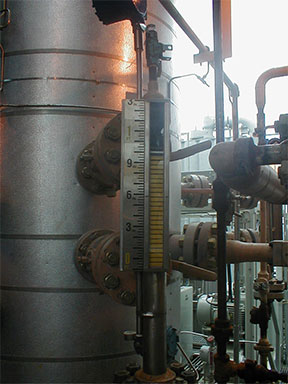 Type is something that sounds broad on the surface, but essentially, we need to understand the nature of the process. Is it a continues process? Does it have an on/off capability associated with it? Is it a batch/recipe control application? If so, the accuracy required is going to be fairly high. We want to know what kind of output is needed. For example, does it require an analog 4-20mA, Modbus or Ethernet? Do we need a visual indication or verification function?
Once we have a pretty good handle on the type of application, we need to discuss the vessel. The type of vessel associated with the application will have an influence on the technology required. Tanks come in different forms and have features that vary from design to design. Is it above or below grade? Is it a floating roof storage tank? Is it a bullet or spherical pressurized tank? What is the material? Where is the instrument entry point?
Finally, what is the process variation to consider. Is the vessel pressurized? What is the temperature range? Etc.
Only once you have determined all of the factors of a particular process are you ready to make decisions concerning the level transmitter technology that works best for you.
The technology comes in two basic forms: differential and submersible. Differential technology can be used on pressurized above grade vessels and requires stable density. It is ideal for dirty or viscous processes.
Submersible technology involves a wetted sensor, requiring a small entry port at the top of the vessel or below grade sump, reservoir or lake, suspended by an electrical cable to the bottom.
There is also conductivity, guided-wave radar, ultrasonic, radar and magnetostrictive technologies available for particular applications. The key is not to make any decisions without discussing it with an expert who can guide you in the most ideal direction based on your particular circumstances. I had an article published in Process Instrumentation magazine last year where I went through this decision tree very thoroughly. Check it out if you haven’t already.