
The Many Layers of Performance and Specifications in Motion Control – Drives and Controls
In high-precision motion control, system performance is often judged simply by the specifications of the mechanics alone. The actuators are typically sorted by a standard set of specifications such as repeatability, accuracy and load capability. For many applications, this is all that’s required. Others will need an understanding of those specifications to make sure the basic assumptions for them are met during installation. Achieving true precision, however, requires a deeper understanding of the full motion control system from the mechanics to the motors, drives and controls.
This series continues to explore how each layer of technology contributes to the overall systems performance. The first article in the series looked at the mechanics, examining critical factors that are often overlooked such as bearing deflection, body stiffness and structural smoothness. The second article looked at the motors, examining their designs, construction, quality and other factors. In this third part of the series, the discussion will surround the importance of the designs and features of drives and controls for the system.
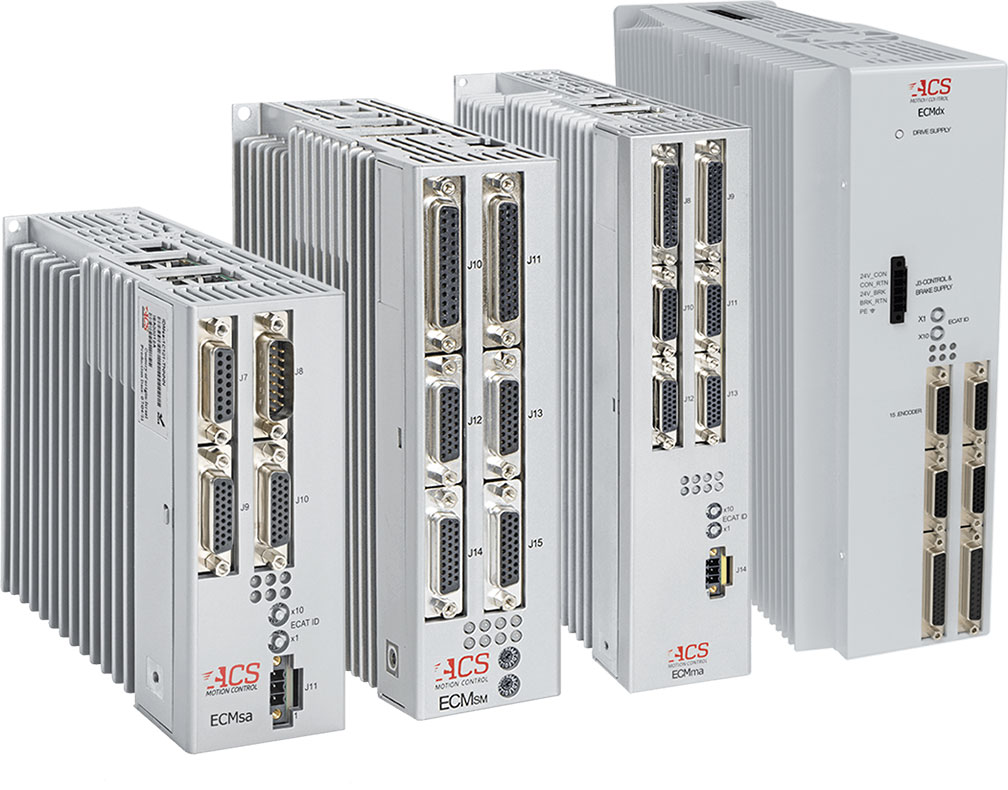
High-performance motion controllers with integrated drives, like the ECM series from ACS Motion Control, are built on a cost-optimized architecture for precision motion systems. This performance is achieved through unique and powerful servo control algorithms, fast servo sampling/update rates, and advanced power electronics techniques. ECM features include advanced motion profile generation, flexible real-time multi-threaded programming, motion optimization tool, motion-to-process event synchronization, and many other advanced controller features.
In all cases, there are details that do not show up on data sheets but can make or break the high-performance expectations of the entire system. As motion systems push beyond micron-level accuracy, traditional specifications start to lose their typical meaning and relevance, making nuanced engineering decisions essential. This series aims to help engineers, designers and system integrators recognize just how important each decision is in putting a high-precision motion system together.
Drives and Controls: The Brains Behind the Motion
In the previous articles, we discussed three general tiers of performance to consider in a motion control system: basic, specification-level, and pushing-beyond-the-specifications performance. This applies to drives and controls as well.
The most basic electric motor applications do not have any built-in intelligence. Power is applied directly to the motor, and it simply turns. Drives, which are the electronics that supply power to motors, make this process smoother and more efficient. Controllers add another level of intelligence by providing more control, such as acceleration, velocity and positioning control. For very basic motor applications, this level of electronics is often more than what is actually needed. In those cases, the main requirement is simply that the electronics are compatible and allow the motor to run. If tuning features are available, the default settings are usually sufficient.
In applications requiring tighter control, the features of the drives and controllers start to become important. The tuning features need to be provided the correct information and parameters need to be adjusted to get the desired performance. The controllers also need to be programmed correctly to get the desired motion profile and sequence of actions. Most issues are caused by simple setup mistakes or missing settings and can usually be fixed easily. Tuning problems are more common and often happen when the system is adjusted by someone without proper training, leading to motion that is either slow and unresponsive or too aggressive and unstable. Using a high-performance motor with lower-performance electronics is generally not ideal, though it is rarely a major issue in most applications.
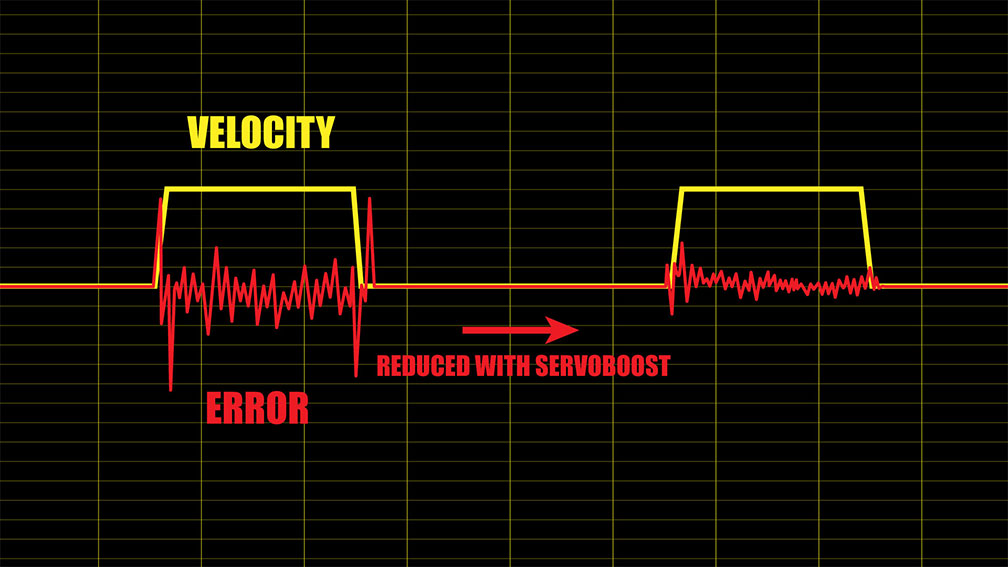
That very mistake of trying to maximize the performance of high-end motors with low-end electronics becomes very apparent, however, in more demanding applications. The motor doesn’t quite achieve the requirements it should. The system becomes difficult to tune resulting in poor performance with an unlimited amount of frustration. In general, meeting the application requirements is just plain difficult and even, in the worst-case scenarios, impossible.
High-performance applications require advanced tuning features with dynamic and adaptable gains, multi-axis synchronization for multi-axis mechanics such as gantries and cartesian robots, and fast update rates for tight current and voltage control. They need to have fast processors to be able to process commands to prevent lag in the logic. They need to have tools to adapt to an environment. One OEM’s tool worked great when assembled in the company’s isolated environment, but when the tool was put in the real world with its electrically and mechanically noisy environment with arc-welders, people, and forklifts, the controls didn’t have the tools, such as notch filters and dynamic tuning parameters, to be able to adapt so they had to be upgraded to ones that did.
There are many other factors that come into play for high-end applications such as:
- “Auto-tuning” isn’t a catch-all silver bullet. It is just a place to start.
- Encoder resolution has to match the application goal and the electronics’ capabilities.
- Fieldbus communication protocols need to be up to the demanding speed and coordination.
Precision motion isn’t as simple as controlling a motor well. It is the art of coordinating information from the target, even the environment, with the variables of the mechanics and motors themselves to achieve the specified goal of the application. The best hardware can’t overcome a dumb control loop.
Article featured in Design World Magazine
Be sure to check out the entire series:
Part 1: The Many Layers of Performance and Specifications in Motion Control - Mechanics
Part 2: The Many Layers of Performance and Specifications in Motion Control – Motors
Part 3: The Many Layers of Performance and Specifications in Motion Control – Drives and Controls
Part 4: The Many Layers of Performance and Specifications in Motion Control – Critical Elements of System Integration