
Ethanol Leak Detection for Environmental Protection in Oil and Gas
Ethanol is an alcohol that is now a standard component in modern fuel blends, but it introduces unique environmental and safety challenges for oil and gas operators. Because ethanol is water soluble, leaks behave differently than traditional hydrocarbons, making specialized detection systems essential for effective ethanol environmental protection.
Why Is Ethanol Leak Detection Different?
Unlike gasoline or diesel, ethanol dissolves into water instead of floating on the surface. This makes ethanol storage leak risks harder to identify using conventional hydrocarbon sensors. When leaks occur in tanks, pipelines, or transfer systems, ethanol can migrate quickly through groundwater, increasing the risk of widespread contamination and regulatory violations.
Key challenge: Most traditional leak detection technologies cannot detect alcohols once they are diluted in water.
Where Do Ethanol Leaks Commonly Occur?
Ethanol leaks most often arise in:
- Storage in tanks and sumps
- Fuel transfer operations
- Pipelines, fittings, and containment systems
- Ethanol Refinery process equipment
- Distilleries and rack houses for liquor (beverage industry)
Because ethanol transfer monitoring is often limited by legacy detection methods, leaks can go unnoticed until environmental damage has already occurred.
How Does the Naftosense Ethanol Leak Detection System Work?
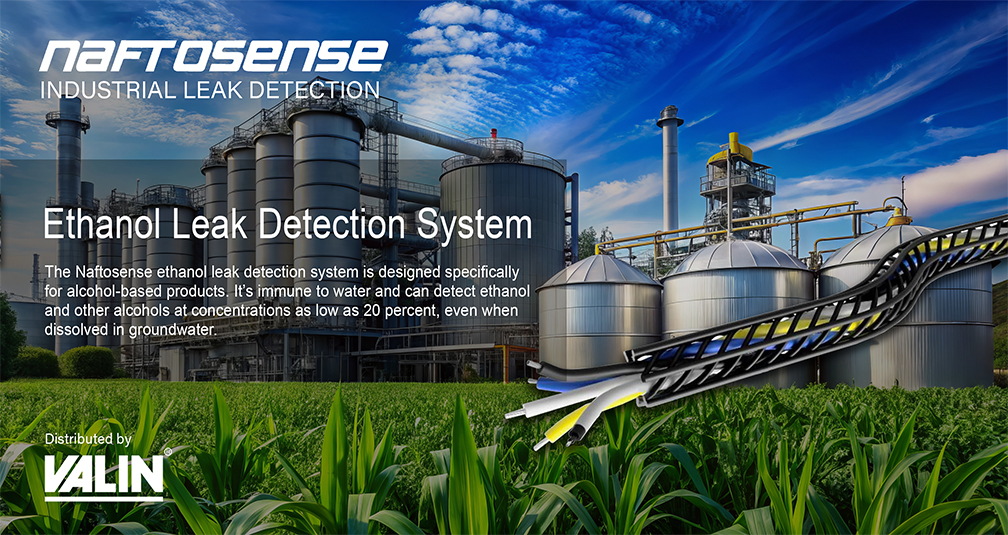
The Naftosense ethanol leak detection system is designed specifically for alcohol-based products. It is immune to water and can detect ethanol and other alcohols at concentrations as low as 20 percent, even when dissolved in groundwater.
A latching alarm feature ensures that brief, high-concentration releases are recorded and reported, alerting staff even if the ethanol plume passes quickly. This provides operators with critical response time to investigate and mitigate risks.
The Naftosense system is very simple. There is a master controller (FLD-SMP-MB-420) that is mounted in a power and control cabinet. This would be wired to a field box (FLD-MXM-PS) mounted near the leak detection probe sensor (FLD-PSP) that would be mounted vertically in a sump or groundwater collection system.
Does the System Detect Other Fuels?
Yes. In addition to ethanol, the system can detect hydrocarbons and hydrocarbon vapors. This makes it a comprehensive solution for facilities handling mixed product streams, supporting broader oil and gas ethanol safety and compliance efforts.
Why Ethanol Leak Detection Matters for Compliance
Regulators closely monitor ethanol releases due to their long-term environmental impact. Undetected leaks can lead to groundwater contamination, fines, and expensive remediation. Purpose-built ethanol leak detection technology helps operators:
- Reduce environmental risk
- Maintain regulatory compliance
- Protect groundwater resources
- Strengthen environmental, health, and safety programs
Looking Ahead
As ethanol use continues to grow, so do the risks associated with storage and transfer. Companies that invest in advanced ethanol leak detection systems are better positioned to manage environmental responsibilities, reduce liability, and demonstrate leadership in fuel safety and environmental protection.
Ethanol Leak Detection for Environmental Protection in Oil and Gas by Naftosense
Have Questions?
Talk to one of our technical specialists today at (855) 737-4718, or fill out our online form to learn more.